






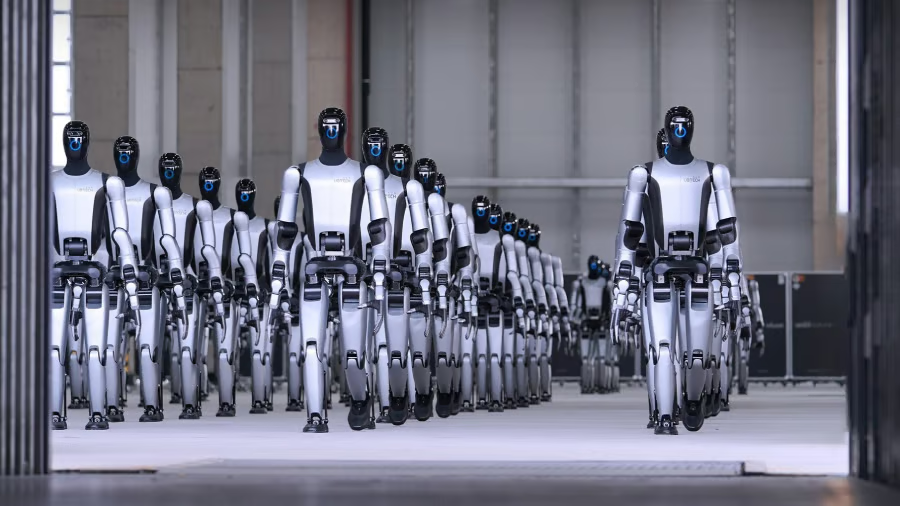


The humanoid robot race is starting to tilt east.
Across China, Japan, South Korea, and Hong Kong, humanoid robots are being built for factories, hospitals, research labs, and service roles. Some are designed to lift and sort. Others are learning to follow instructions, swap their own batteries, or turn AI models into physical movement.
The result is a new hardware contest hiding inside the AI boom. The next great AI platform may not be a chatbot or phone. It may be a machine with arms, legs, sensors, and a very expensive habit of falling over.
1. Unitree G1
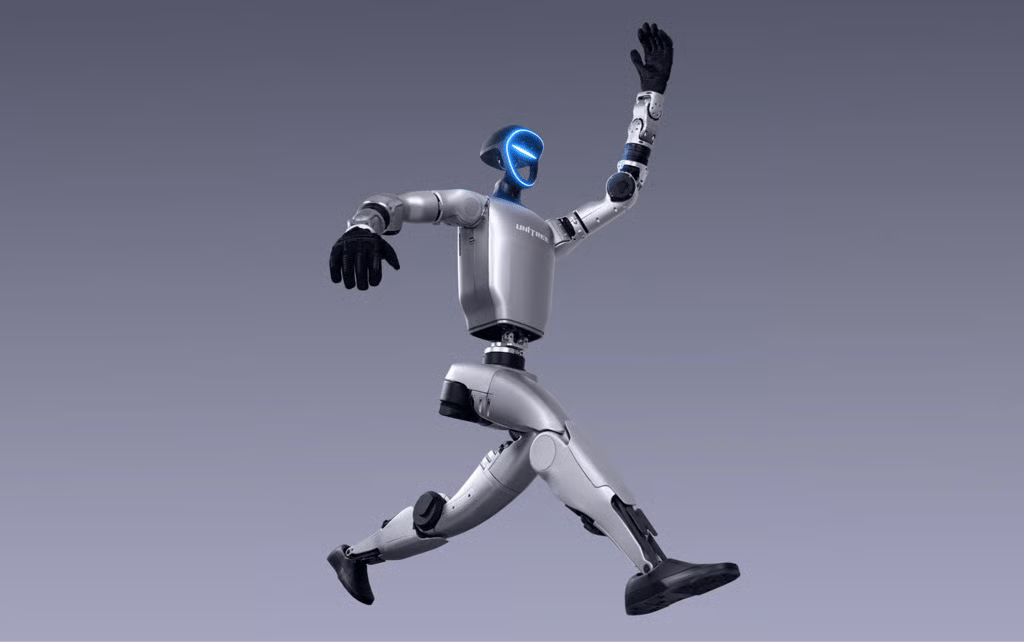
Headquarters: Hangzhou, China
China’s Unitree G1 may be one of the clearest signs that humanoid robots are becoming more accessible. Unitree positions the G1 as a developer-friendly humanoid platform, with sensing, mobility, and AI-training capabilities aimed at researchers and companies experimenting with embodied intelligence.
Its significance is partly economic. Humanoid robots have historically been expensive lab machines, but lower-cost platforms could widen the field of developers able to test motion control, manipulation, imitation learning, and workplace use cases.
If APAC’s robot race becomes a volume game, Unitree is one of the companies trying to push it there first.
2. UBTech Walker S2
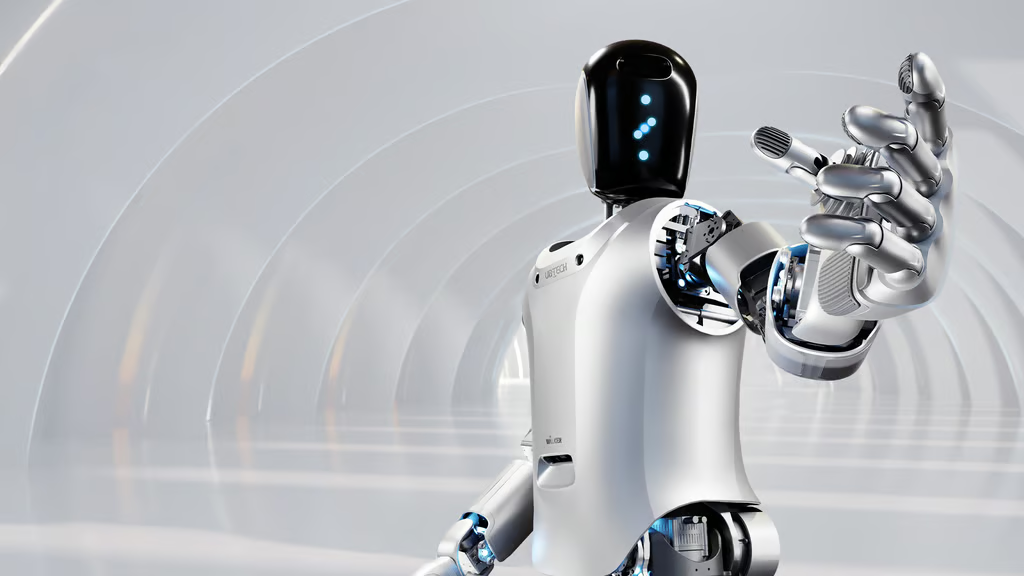
Headquarters: Shenzhen, China
UBTech’s Walker S2 is built around one of the most practical questions in humanoid robotics: How does the robot keep working once the demo ends? The company has promoted Walker S2 as an industrial humanoid capable of autonomously swapping its own batteries, a feature designed to reduce downtime in factory and logistics settings.
That matters because enterprise robotics is not won by flashy movement alone. Robots need uptime, repeatability, safety, and integration into existing workflows. Walker S2 gives the APAC race a more operational edge, in which humanoids are judged less by how human they look and more by whether they can remain productive on the floor.
3. AgiBot A2

Headquarters: Shanghai, China
Shanghai-based AgiBot is leaning directly into the “embodied AI” framing. Its A2 lineup is part of a broader push that includes humanoid hardware, development platforms, and datasets meant to help robots learn from physical environments.
AgiBot’s significance is the stack. The company is not just selling a humanoid shell; it is trying to integrate hardware, data, developer tools, and robot intelligence into a single ecosystem. That makes it a useful example of how China’s robotics sector is trying to scale humanoids as platforms rather than just products.
4. Fourier GR-2
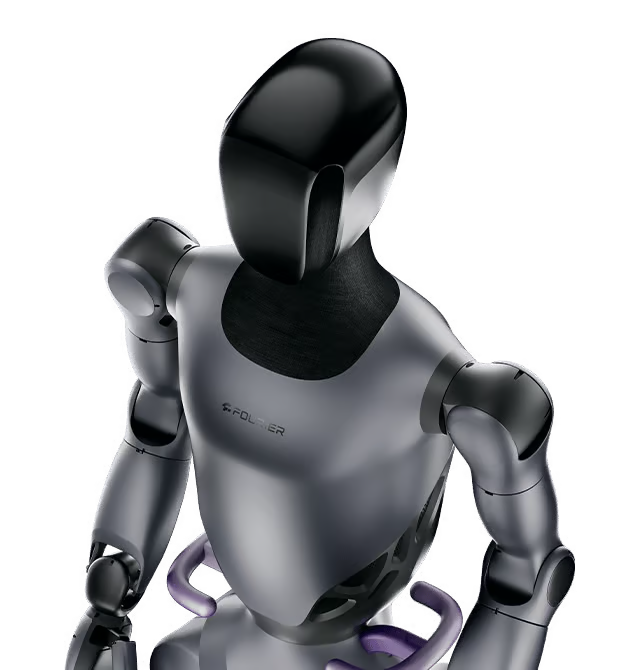
Headquarters: Shanghai, China
Fourier’s GR-2 gives APAC’s humanoid race a healthcare and rehabilitation angle. The robot builds on the company’s earlier GR-1 humanoid and reflects Fourier’s broader background in rehab robotics, mobility assistance, and human-centered automation.
That background gives GR-2 a different flavor from warehouse- or factory-first humanoids. Instead of focusing only on industrial labor, Fourier is positioned near eldercare, therapy, hospital support, and mobility use cases, areas where aging populations could create strong demand for assistive robotics.
The challenge will be proving that humanoid form factors can add real value in sensitive care environments.
5. Rainbow Robotics HUBO
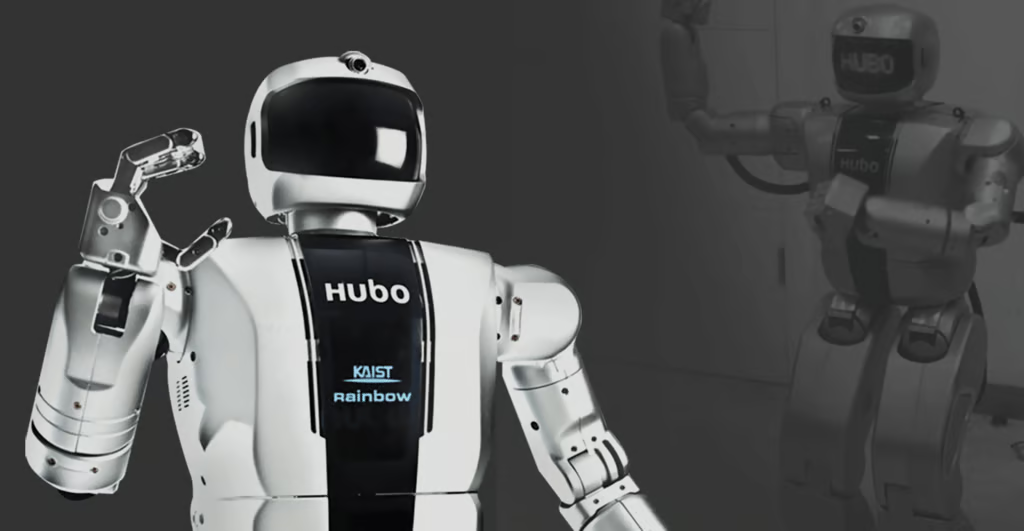
Headquarters: Daejeon, South Korea
South Korea’s Rainbow Robotics brings academic credibility and corporate momentum to the list. The company grew out of KAIST’s humanoid robotics work and is tied to the HUBO lineage, one of South Korea’s most recognizable humanoid robot programs.
Its importance has grown as Samsung has moved deeper into robotics. That connection gives Rainbow Robotics a stronger ecosystem story, because humanoid robots will need more than clever mechanics. They will need chips, batteries, sensors, manufacturing capacity, software, and commercial channels.
Rainbow Robotics helps illustrate how South Korea could integrate humanoids into a broader AI hardware strategy.
6. Kawada NEXTAGE

Headquarters: Tokyo, Japan
Japan’s Kawada NEXTAGE is not a walking humanoid in the sci-fi sense, but it is one of the more grounded examples of human-shaped automation already aimed at real work. The dual-arm system is designed for manufacturing environments where robots may need to operate alongside people and adapt to existing production lines.
NEXTAGE is important because it shows the practical middle ground between traditional industrial robot arms and fully mobile humanoids. Many businesses may not need a robot with legs right away. They may need a reliable upper-body humanoid that can use tools, handle parts, and fit into workspaces designed for people.
That makes NEXTAGE a useful reality check for the broader humanoid hype cycle.
7. Alter3
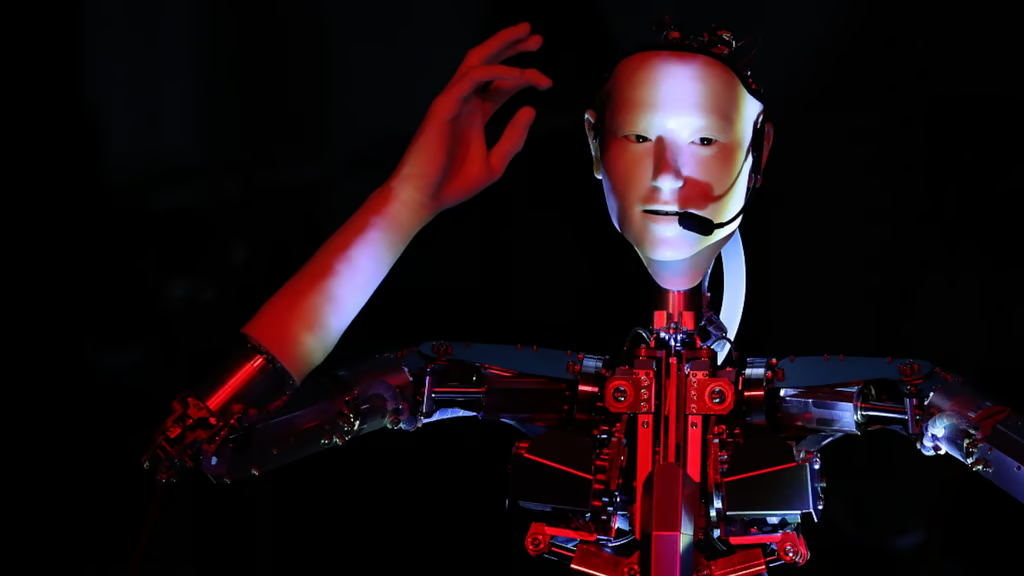
Headquarters: Tokyo, Japan
Japan’s Alter3 shows the AI side of humanoid robotics more directly. The research android has been used to explore how large language models can generate physical motion, including poses and movement sequences, from natural-language prompts.
Alter3 is unlikely to be the robot entering a warehouse shift tomorrow. Its value is more experimental: it asks whether AI models can become useful controllers for bodies, not just chat interfaces. That question sits at the center of embodied AI. If robots are going to move through the world intelligently, they will need systems that can translate language, intent, perception, and action into coordinated physical behavior.
What comes next for APAC’s humanoid robot race
The humanoid robot race is still early, expensive, and full of engineering bruises.
These machines can stumble, struggle, and overpromise. But the direction is getting clearer: APAC’s robotics companies are trying to turn AI from something that answers questions into something that can act in the physical world. That shift could make humanoid robots one of the next major tests of AI hardware.
The winners will not simply build the most human-looking machine. They will build robots that are useful, reliable, affordable, and safe enough to work beside people.
For now, APAC’s humanoid robots are not replacing the workforce. They are revealing where the next workforce experiment may begin.
More news: Read the related eWeek story on how China’s humanoid robot strategy could turn demographic pressure into an automation advantage across APAC.